


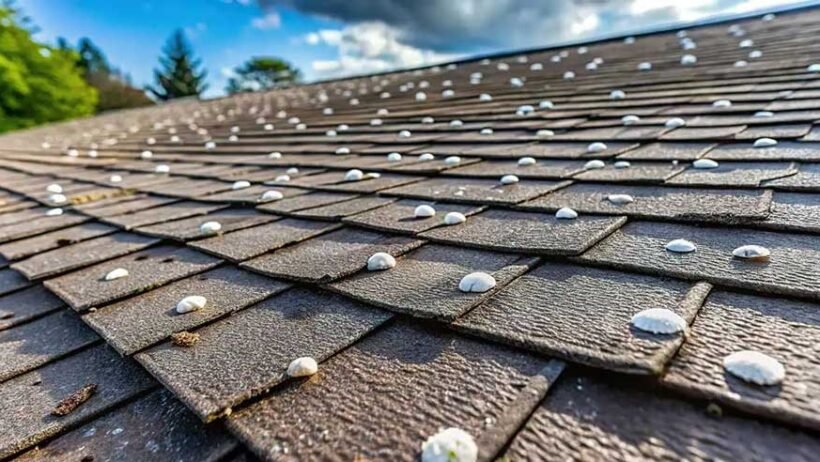

A hailstorm can leave behind damage that is easy to miss. Even when a roof looks fine from the ground, hail can cause small dents or cracks that weaken the structure. Over time, these hidden problems can lead to water leaks and other costly repairs. It helps to know what to look for before these issues grow into something serious.
A simple visual check after every storm can save time and money. Trained hail-damaged roof contractors know how to spot issues that the untrained eye might miss. They can assess whether the damage is minor or if repairs are necessary to keep your roof in good condition.
Granule Loss On Shingles
Granules protect shingles from sunlight and moisture. When hail hits the surface, it can knock these tiny particles loose. Once the granules fall away, the exposed area becomes more vulnerable to water and heat. The surface starts to wear out faster, which reduces the roof’s overall lifespan.
You can check for granule loss by looking into the gutters or near the base of downspouts. If you find small, sand-like particles collected there, it may point to hail impact. Even when shingles appear solid, the loss of granules weakens the surface. Early repair prevents deeper damage to the roofing layers.
Bruises On Shingles
Hail can create dents or soft spots that are hard to see at first. These spots might look like dark marks or subtle depressions on the shingles. Although they may seem harmless, they reduce the roof’s ability to keep out moisture. The damaged areas weaken further as time passes.
You can detect bruising by feeling the surface with gentle pressure. A soft or spongy texture signals damage beneath the surface. When moisture seeps into these spots, it can lead to more serious roof leaks. Fixing these areas quickly helps maintain the roof’s strength and reliability.
Cracked Or Split Shingles
Hail can cause shingles to crack or split when the impact is strong. The cracks can appear in straight lines or form small patterns across the surface. These openings allow water to slip under the shingles and reach the underlayment. Once moisture enters, it may affect the structure beneath.
A visual inspection from different angles helps detect cracks that are not easy to see. Even tiny splits weaken the shingles and create space for leaks. Replacing the affected shingles helps prevent further deterioration. A professional inspection ensures no hidden fractures remain.
Damaged Roof Flashing And Vents
Flashing seals the roof joints where water tends to collect. Hail can bend or loosen flashing, allowing moisture to slip through the gaps. Once that happens, rainwater can seep into areas where it should not go. The longer it remains unchecked, the higher the chance of damage to the interior.
Vents and metal fittings also suffer during a hailstorm. Small dents or chips on vents can seem harmless, but weaken their ability to keep out water. A close look at these parts after a storm can prevent leaks later. Replacing damaged shingles protects the entire roofing system.
Hidden hail damage can affect a roof’s strength and appearance if left unattended. Skilled hail-damaged roof contractors have the experience to detect and repair even the smallest issues. Regular inspections after a storm help prevent moisture intrusion and extend the roof’s lifespan. With quick attention and proper maintenance, your roof stays durable and ready for the next season.