


Cleaning your dryer regularly helps extend its lifespan, improve performance, and prevent overheating or fire hazards. Whether you just bought a new dryer or switched to a different type, it’s important to know the right way to take care of it.
Disclaimer
Before cleaning or servicing your dryer, always read the user manual that came with your appliance. It contains specific maintenance steps for your model. If your dryer has stopped working and rebooting it doesn’t help – contact us – we offer professional service and quick help at dryer repair in Charlotte
Why You Should Read the Manual
Even if you’ve used dryers before, each model has its own features and quirks. The layout of buttons, filters, and programs can vary widely. Some dryers come with self-cleaning systems or connected apps, while others require manual steps. There might be differences in how the sensors detect moisture or how the air circulates inside the drum. Some dryers have built-in drains that handle water automatically, while others need you to empty a tank after each cycle. Understanding these details helps you avoid mistakes, save time, and keep the appliance working efficiently. Reading the manual also helps you learn hidden features that can make drying faster, quieter, and more energy efficient.
What Maintenance Depends On
Maintenance frequency depends on how your dryer is designed. Models differ by:
- Drain connection – if there’s no drain, empty the water tank manually.
- Air vent – if your dryer vents air outside, clean the duct regularly.
- Condenser type – removable ones can be rinsed; fixed ones require gentle vacuuming or brushing.
- Heat pump – these models need dry cleaning, not washing.
- Lint filter – must be cleaned after every cycle.
Condenser dryers heat air with an element, dry clothes, and cool moist air through a condenser. It’s simple but uses more energy.
Heat pump dryers recycle warm air through a closed system using refrigerant. They dry gently, saving energy and fabric quality. Understanding which one you own helps you clean it correctly.
Serious Dryer Problems?
If your dryer won’t start, doesn’t heat, or cleaning doesn’t fix the issue – don’t stress. Our certified technicians can visit your home and fix it safely using original parts. Contact Ok Appliance Repair for same-day service.
Step 1: Clean the Lint Filter
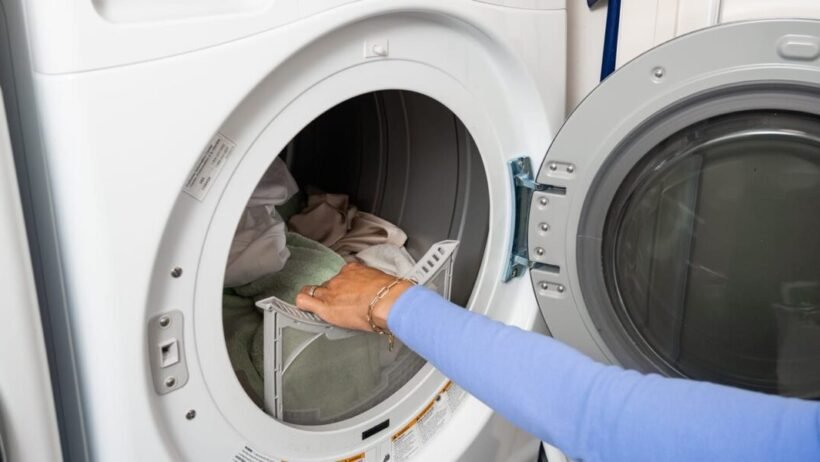
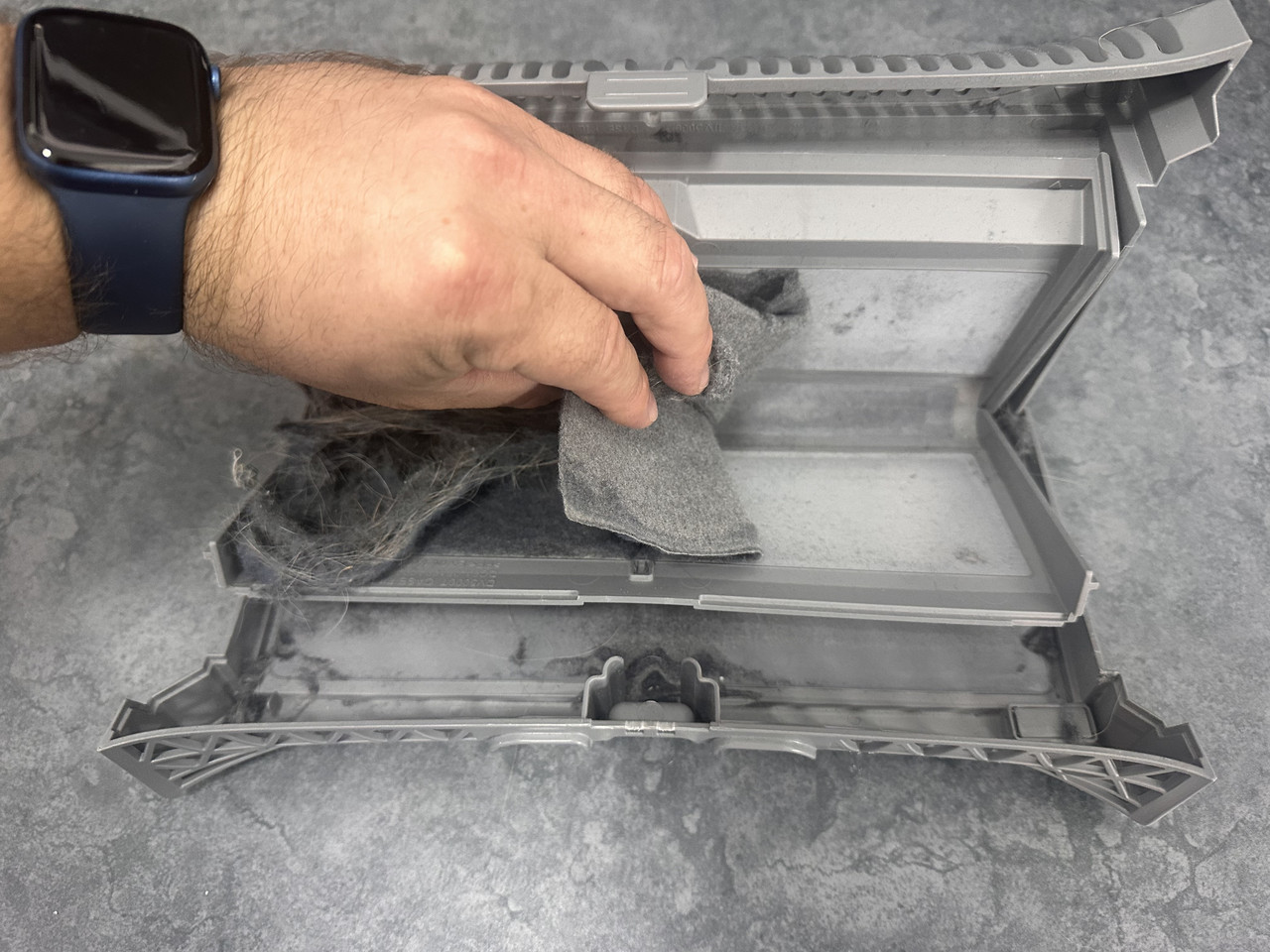
Do this after each drying cycle. Open the door, take out the filter, and remove lint by hand or a soft brush. If you see softener residue, wipe it with a damp cloth. Let the filter dry completely before replacing it.
Step 2: Clean the Air Duct (for vented dryers)
Every 2–3 months, unplug the dryer and disconnect the vent. Use a vacuum or brush to remove lint and dust. Check that the duct isn’t damaged and reconnect it tightly.
Step 3: Clean the Condenser
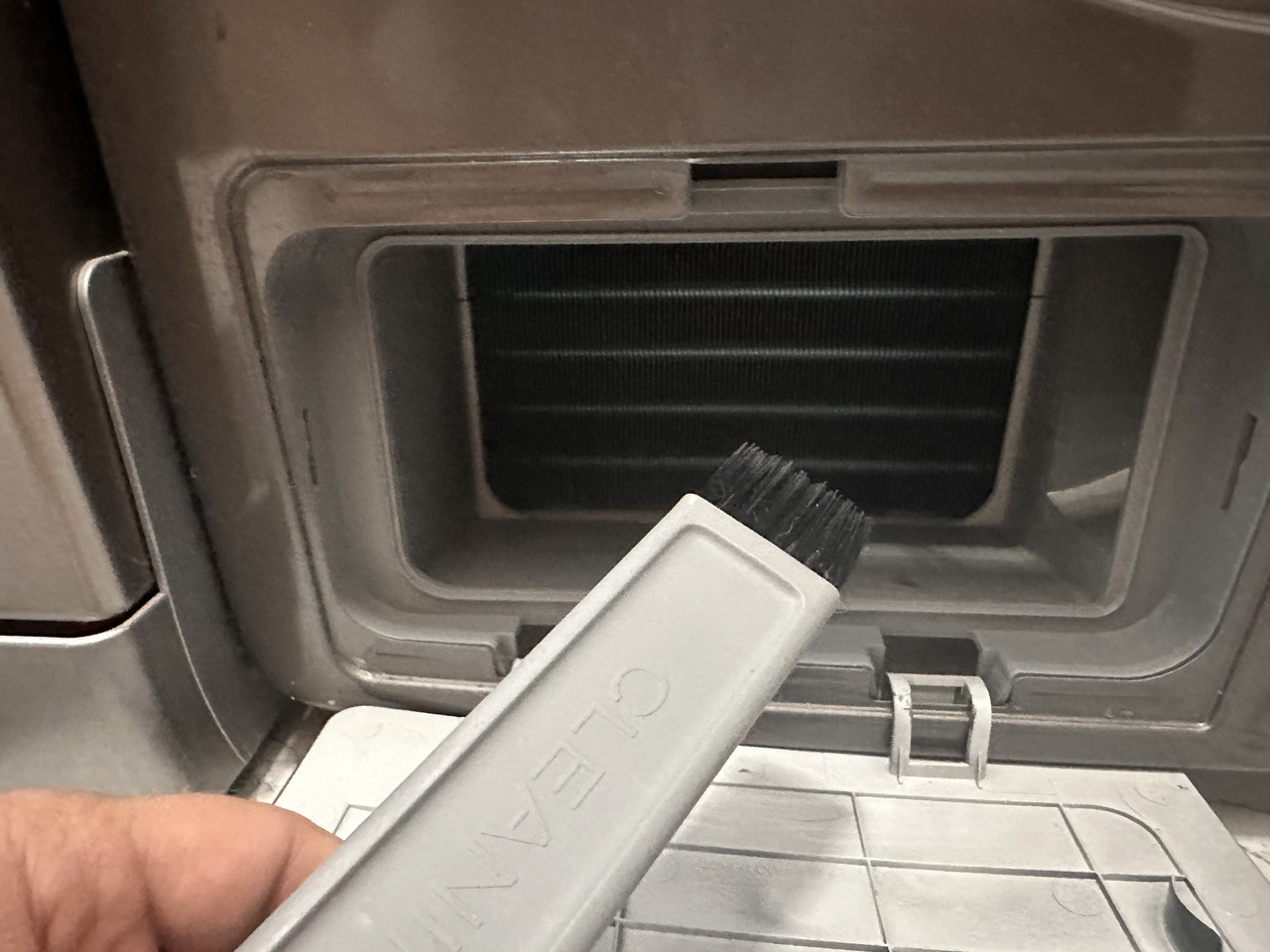
Do this once or twice a month. If it’s removable, take it out, rinse gently under water, and dry completely. For non-removable condensers, use a soft brush or vacuum with gentle suction. Avoid water if it’s a heat pump model – only dry cleaning is safe.
Step 4: Clean the Drum
Once a month, wipe the drum with a soft cloth dipped in water and mild detergent or vinegar. Dry with a clean cloth and leave the door open to air out.
Step 5: Empty the Water Tank
If your dryer doesn’t have a drain connection, remove and empty the tank after each cycle. Rinse and dry it before placing it back.
Step 6: Wipe Sensors and Exterior
Humidity sensors (thin metal strips inside the drum) can be wiped with alcohol or a damp cloth. Use a soft cloth for the exterior as well. Avoid abrasive cleaners – they can damage the surface.
Step 7: Fix Common Issues
If you smell an odor, clean the drum and leave the door open after use. If the dryer is noisy, clean all filters and ducts. For error messages, follow the display prompts or check the manual.
Maintenance Schedule
To keep your dryer in top condition, follow this simple cleaning plan:
- Lint filter: after every cycle.
- Water tank: after every cycle (if applicable).
- Air duct: every 2–3 months.
- Condenser: every 1–2 months.
- Drum: once a month.
- Humidity sensors: every few weeks.
- Full inspection: every 6 months – or sooner if performance drops.
Regular cleaning saves energy, prevents breakdowns, and extends the life of your appliance. A few minutes of care today can prevent costly repairs tomorrow.