


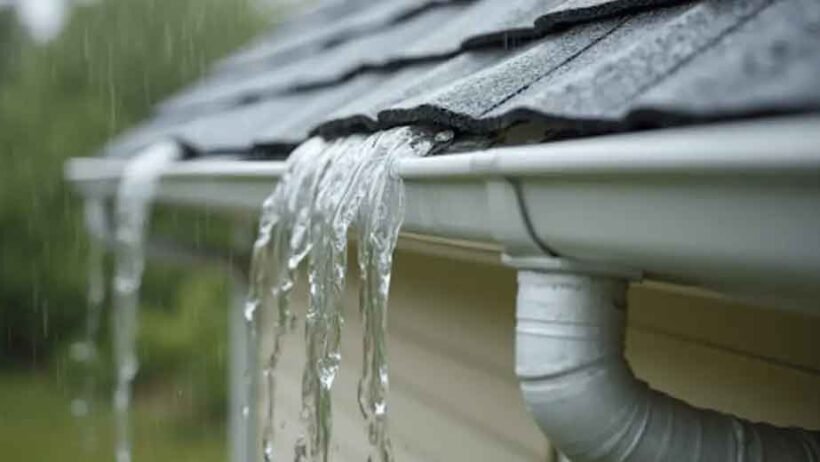

When gutters overflow, many homeowners assume it’s just due to heavy rain or natural wear and tear. But in reality, gutter overflow is your home’s way of sending a warning. It’s not just about water spilling over the edges, but overflowing gutters can signal deeper issues that, if ignored, could lead to costly repairs. Understanding what your gutters are really telling you helps protect your roof, foundation, landscaping, and overall home health.
Your Gutters Are Clogged
The most common reason for gutter overflow is blockage from leaves, twigs, dirt, and even shingle granules. When debris builds up, water can’t flow through the downspouts, so it spills over the sides. While this may seem minor, trapped water can soak roofing materials, fascia boards, and siding, eventually leading to rot, mold, and structural decay. Homeowners should be cleaning your gutters at least twice a year to prevent many of these issues.
Your Gutters Are Improperly Sloped
Gutters must be installed at a slight slope to allow water to move toward the downspouts. If the slope is too flat, water will sit still or overflow at the opposite end. Poor slope can stem from improper installation, age-related sagging, or heavy debris weighing down the gutter system. Standing water puts stress on your gutters, causing detachment, leaks, or premature failure.
Your Downspouts Can’t Handle the Flow
Even clean gutters can overflow if the downspouts are too small or too few to handle heavy rainfall. When water can’t drain quickly, it backs up, leading to overflow and possible pooling around your home’s foundation. Adding additional downspouts or upsizing existing ones helps direct water safely away.
Your System Is Too Small for Your Roof Size
Not all gutters are created equal. If your home has a large roof surface but small gutters, they may not be able to carry water efficiently, especially during heavy storms. In these cases, upgrading to 6-inch gutters instead of standard 5-inch models can make a major difference. Proper sizing ensures your gutter system matches the amount of water your roof sheds.
Possible Damage to Your Foundation, Siding, and Landscaping
If gutter overflow is left unchecked, it can cause water to pool near the foundation, increasing the risk of cracks, basement leaks, and soil erosion. Overflowing water can also stain siding, kill landscaping, and even attract pests like mosquitoes or termites.
Conclusion
When your gutters overflow, it’s more than just a messy inconvenience. It’s your home warning you of underlying issues in your drainage system. Addressing these problems early helps protect your roof, walls, foundation, and landscaping. With proper maintenance, correct sizing, and quality installation, you can ensure your gutters do what they’re meant to do.